

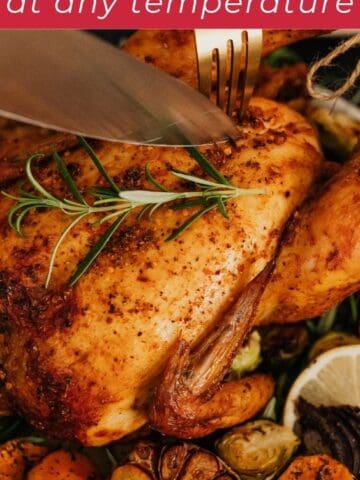
Roasting chicken is one of those family traditions I’ve kept alive for over 30 years of home cooking. When my kids were little, a whole roasted chicken was the easiest way to feed everyone with minimal fuss, and now I still roast one almost weekly.
The question I get most often is: how long do you roast chicken at different oven temperatures?
Quick answer: a whole chicken roasts in about 20 minutes per pound at 350°F, or roughly 1 hour 15 minutes to 1 hour 45 minutes for a typical 4-6 lb bird. Exact chicken cooking times shift with oven temperature, so use the chart below and always confirm doneness with a meat thermometer at 165°F in the thickest part of the thigh.
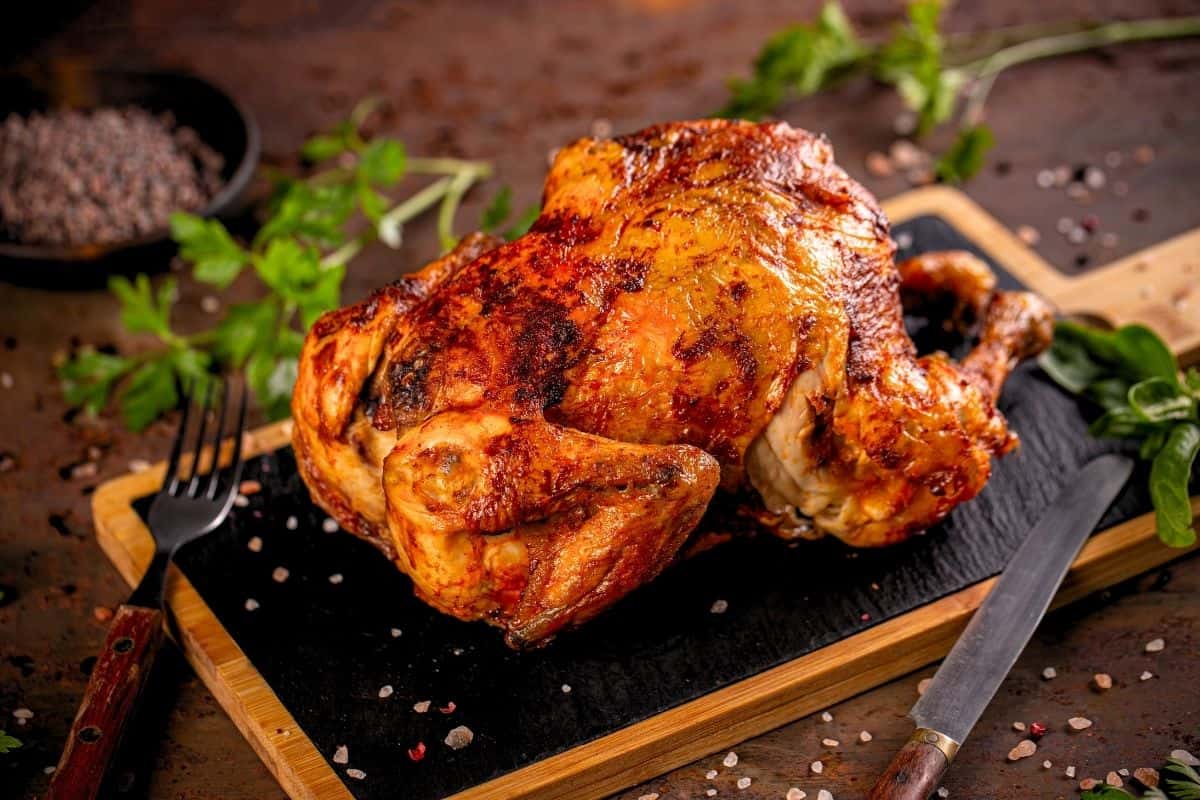
The good news is, you don’t need to memorize complicated charts. With just a few numbers, a meat thermometer, and some simple tips, you can roast a chicken at nearly any oven temperature and have it turn out juicy, golden, and safe to eat.


Today, I’ll share a helpful breakdown, plus flavor ideas, side dish suggestions, and what to do with leftovers. Check out the downloadable PDF in the bottom of the post!
Chicken Cooking Time & Temperature Chart
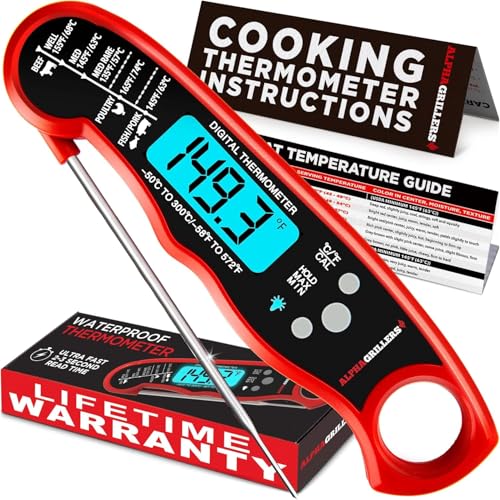
The magic number for doneness is always 165°F internal temperature (measured with meat thermometer at the thickest part of the thigh and also checked at the breast). Once you know that, cooking time depends on oven temperature and chicken weight.

Find your bird on the left, your oven temperature across the top, and read the time where they meet. These times are for an unstuffed chicken roasted on the middle rack in a conventional oven.
| Chicken weight | 325°F | 350°F | 375°F | 400°F | 425°F |
|---|---|---|---|---|---|
| 3 lb | 1 hr to 1 hr 15 min | 50 min to 1 hr | 50 min to 55 min | 45 min to 50 min | 35 min to 45 min |
| 3.5 lb | 1 hr 10 min to 1 hr 30 min | 1 hr to 1 hr 10 min | 55 min to 1 hr 5 min | 50 min to 1 hr | 45 min to 55 min |
| 4 lb | 1 hr 20 min to 1 hr 40 min | 1 hr 10 min to 1 hr 20 min | 1 hr 5 min to 1 hr 15 min | 1 hr to 1 hr 5 min | 50 min to 1 hr |
| 4.5 lb | 1 hr 30 min to 1 hr 55 min | 1 hr 20 min to 1 hr 30 min | 1 hr 15 min to 1 hr 25 min | 1 hr 5 min to 1 hr 15 min | 55 min to 1 hr 10 min |
| 5 lb | 1 hr 40 min to 2 hr 5 min | 1 hr 30 min to 1 hr 40 min | 1 hr 25 min to 1 hr 30 min | 1 hr 15 min to 1 hr 20 min | 1 hr 5 min to 1 hr 15 min |
| 5.5 lb | 1 hr 50 min to 2 hr 20 min | 1 hr 35 min to 1 hr 50 min | 1 hr 30 min to 1 hr 40 min | 1 hr 20 min to 1 hr 30 min | 1 hr 10 min to 1 hr 25 min |
| 6 lb | 2 hr to 2 hr 30 min | 1 hr 45 min to 2 hr | 1 hr 40 min to 1 hr 50 min | 1 hr 30 min to 1 hr 40 min | 1 hr 15 min to 1 hr 30 min |
| 6.5 lb | 2 hr 10 min to 2 hr 45 min | 1 hr 55 min to 2 hr 10 min | 1 hr 50 min to 2 hr | 1 hr 35 min to 1 hr 45 min | 1 hr 20 min to 1 hr 40 min |
| 7 lb | 2 hr 20 min to 2 hr 55 min | 2 hr 5 min to 2 hr 20 min | 1 hr 55 min to 2 hr 10 min | 1 hr 45 min to 1 hr 55 min | 1 hr 30 min to 1 hr 45 min |
Minutes Per Pound At Each Temperature
If you prefer to do the math yourself, here is the rate each oven temperature works out to:
- 325°F: 20 to 25 minutes per pound
- 350°F: 18 to 20 minutes per pound
- 375°F: 17 to 18 minutes per pound
- 400°F: 15 to 16 minutes per pound
- 425°F: 13 to 15 minutes per pound
Roasting a stuffed chicken? Add 15 to 30 minutes to the times above, and make sure the stuffing itself reaches 165°F, not just the meat.
What Temperature Is Whole Chicken Done At?
Time gets you close. Temperature is what actually tells you the chicken is ready.

| Where you measure | What you want to see |
|---|---|
| Thickest part of the thigh | 165°F minimum, and up to 175°F for a better dark meat texture |
| Thickest part of the breast | 165°F, and try not to go past it or the breast dries out |
| After resting 10 to 15 minutes | The temperature carries on climbing about 5°F |
Roasting in a convection oven? Drop the temperature by 25°F from whatever the chart says, then start checking about 15 to 20 minutes early. A convection fan moves hot air around the bird, so it browns faster and cooks quicker than the times above.
Rita's Tip
In my kitchen, 400°F strikes the best balance of crispy golden skin and juicy meat. Lower temps are more forgiving if you’re multitasking, while higher temps give that rotisserie-style finish.
How To Prepare Chicken For Roasting
- Remove chicken from the fridge 20-30 minutes before cooking so it cooks evenly.
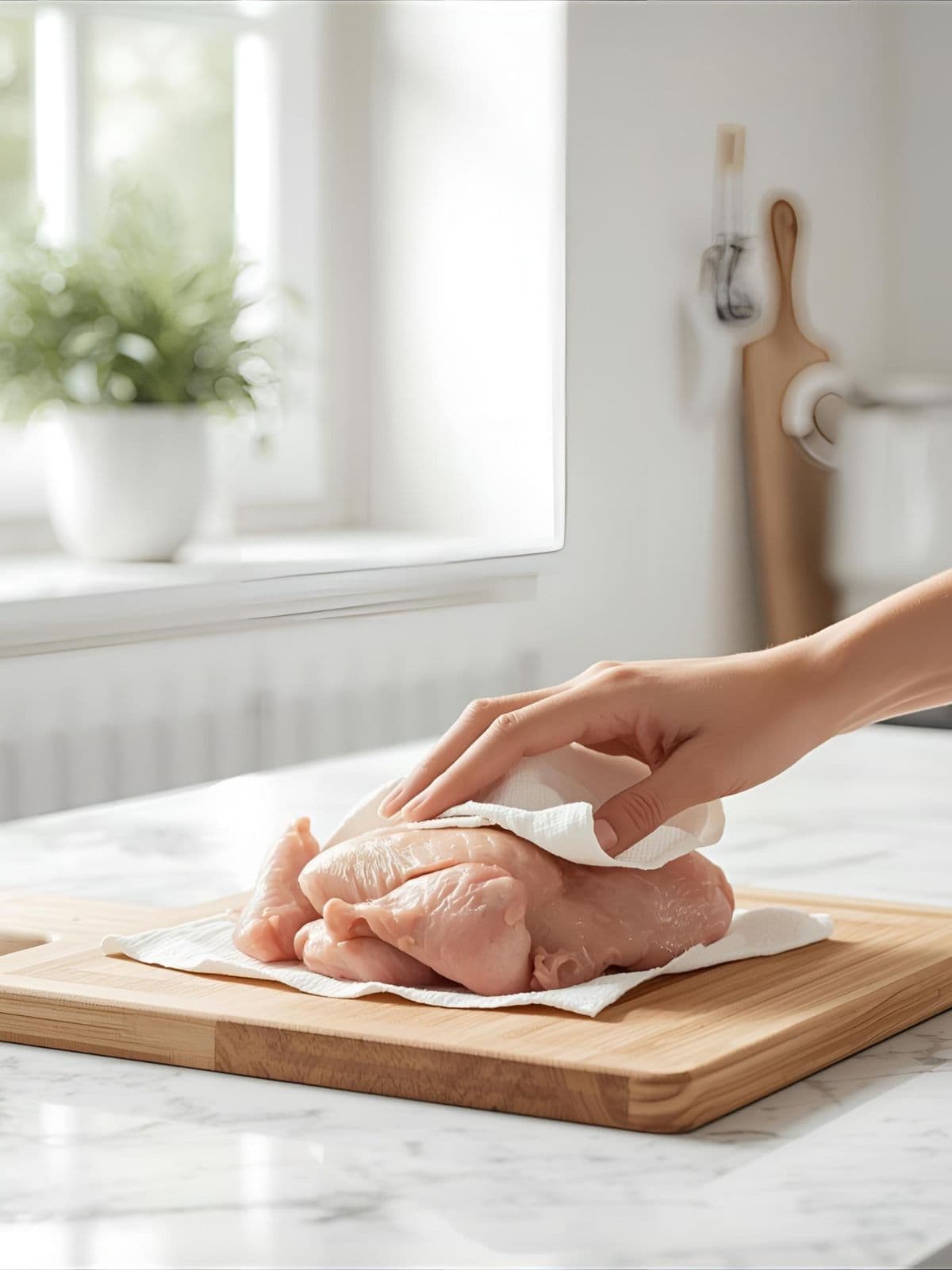
- Pat dry with paper towels. Dry skin means crispier skin.
- Season generously. A classic mix is 2 teaspoon kosher salt, 1 teaspoon black pepper, 1 teaspoon garlic powder, and 1 teaspoon paprika.
- Add aromatics to the cavity. Half a lemon, garlic cloves, and fresh herbs like rosemary or thyme.
- Optional truss. Tying the legs helps the chicken cook more evenly.
- Use the middle oven rack for the most consistent heat circulation.
Mix & Match Flavors
- Swap lemon for orange and thyme for sage for a cozy fall version.
- Use smoked paprika, cumin, and chili powder for a Tex-Mex twist.
- Rub with olive oil, oregano, and lemon zest for Greek-inspired chicken.
- Try honey, soy sauce, and ginger for an Asian-style glaze.
- Add hearty veggies like parsnips, turnips, or sweet potatoes alongside carrots.
If you want a one-pan dinner, check out my recipe for Roasted Chicken And Vegetables where potatoes, sweet corn, and crisp green beans roast alongside the chicken.
Resting, Carving & Serving
Once your chicken reaches 165°F, let it rest for 10-15 minutes before carving. This step keeps the juices inside and makes the meat more tender.
To carve: start by removing the legs and thighs, then slice the breast meat against the grain.
Pair your roast chicken with sides like rice pilaf, creamy mashed potatoes, fresh salads, or a comforting casserole.

Storing Leftovers & Freezing
- Fridge: Store cooled chicken in an airtight container for 3-4 days.
- Freezer: Wrap tightly in foil or freezer bags and freeze for up to 3 months.
- Reheating: Warm gently in a 325°F oven or use leftovers in soups, tacos, pasta bakes, or chicken salad.
Favorite Recipes You'll Love

Roasting Whole Chicken FAQs
Can I roast a chicken straight from the fridge?
Yes, but letting it sit at room temperature for 20 minutes first helps it cook more evenly.
Do I need to cover the chicken with foil?
Not usually. If the skin browns too quickly, tent loosely with foil for the last 20-30 minutes.
Should I baste while roasting?
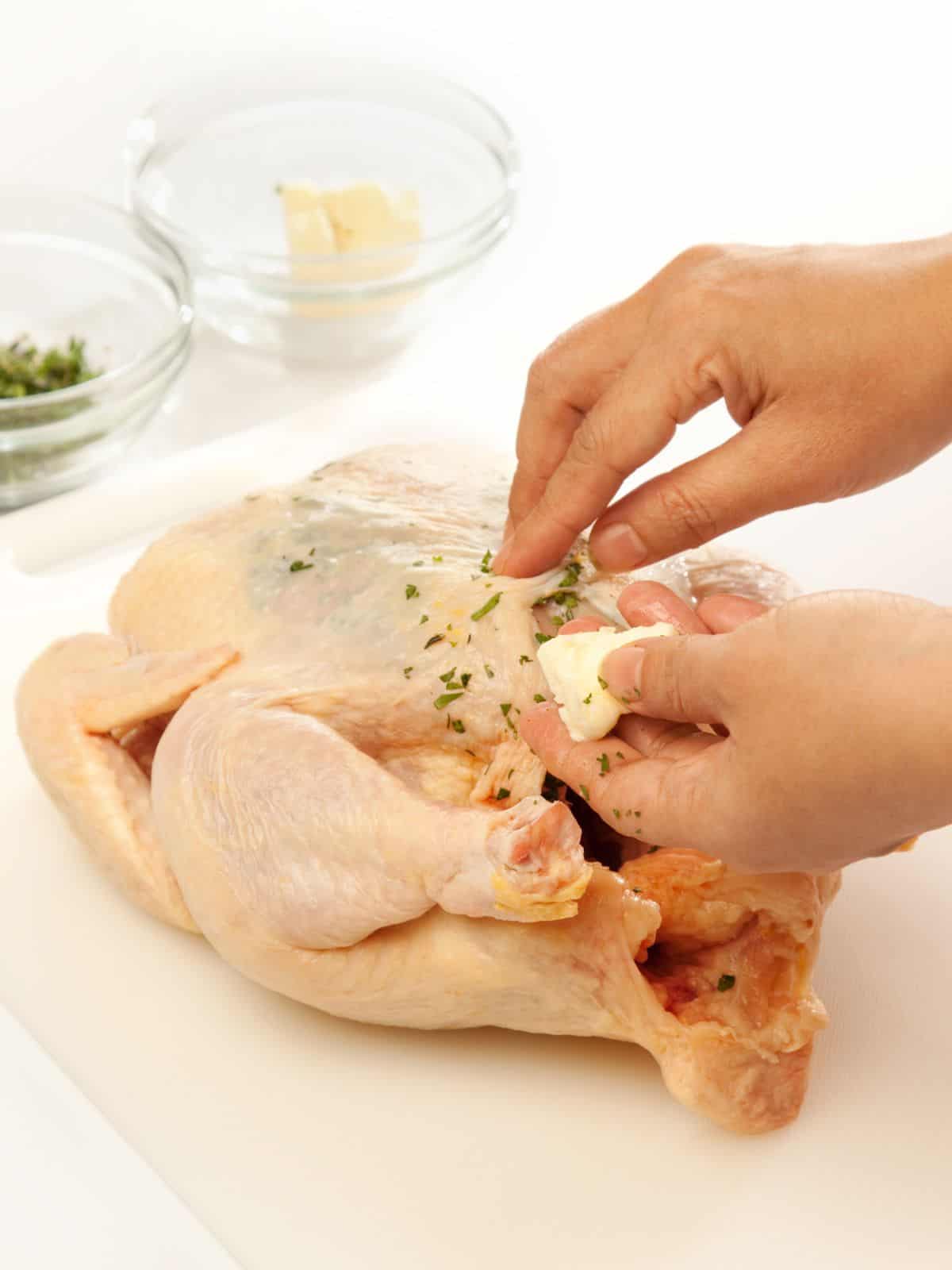
Optional. Basting adds flavor but also releases heat each time you open the oven. I prefer brushing butter or oil under the skin before roasting.
Fun Variations to Try
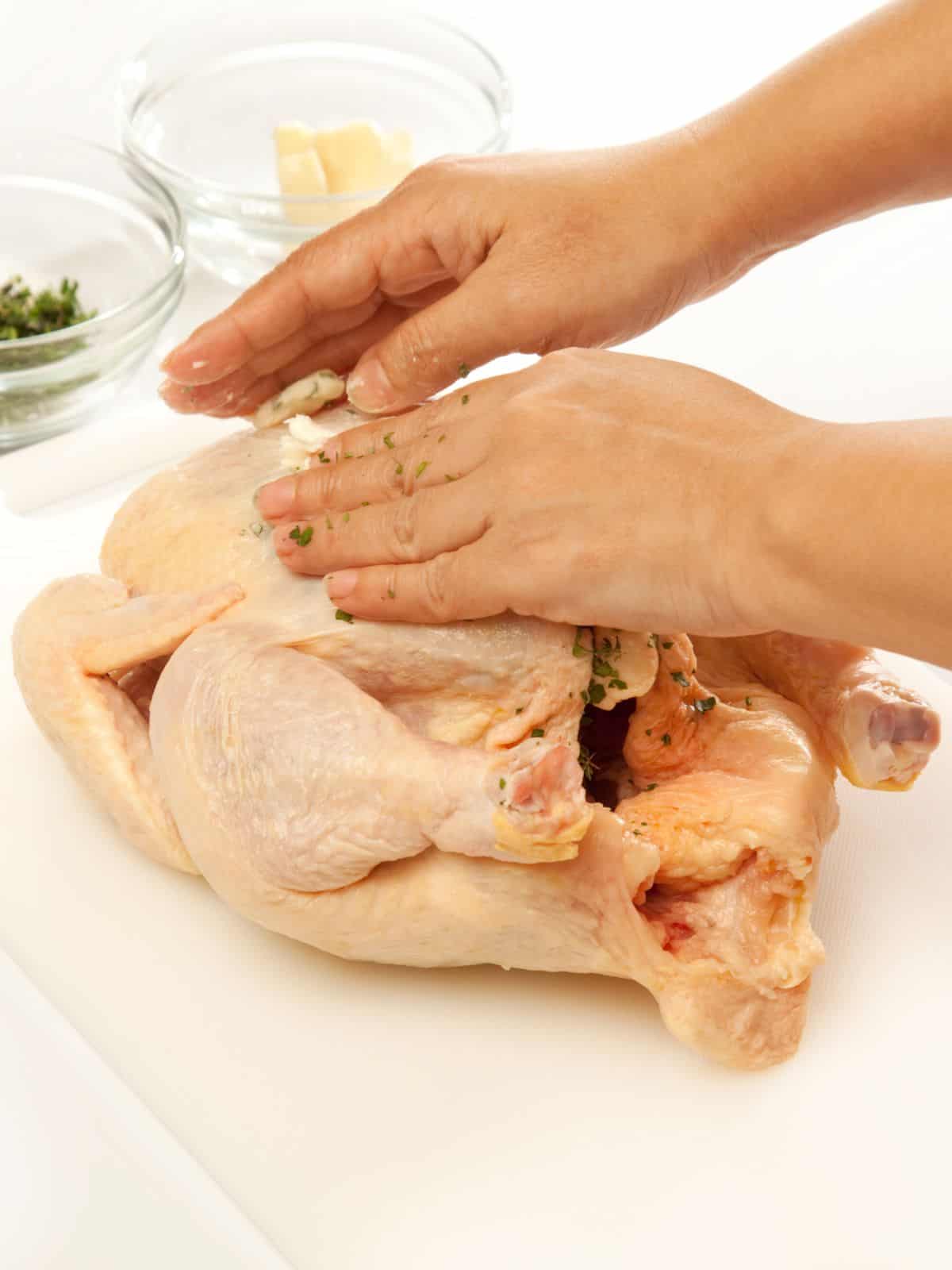
- Herb butter roast chicken. Rub softened butter mixed with fresh herbs under the skin before roasting.
- Spatchcock chicken. Remove the backbone and flatten the chicken so it roasts faster and more evenly.
- Lemon garlic chicken. Stuff the cavity with lemon halves and garlic cloves for bright, aromatic flavor.
Ways to Serve Roast Chicken
- With roasted vegetables and pan gravy made from the drippings.
- Shredded into salads or sandwiches for easy meal prep.
- Alongside mashed potatoes for a classic Sunday dinner.
Roast Chicken Questions, Answered
How long does it take to cook a whole chicken?
Most whole chickens land somewhere between 1 hour and 2 hours 30 minutes. A 4 lb chicken at 375°F takes about 1 hour 5 minutes to 1 hour 15 minutes. Match your weight to your oven temperature in the chart above, then confirm 165°F before you serve it.
What temperature should a whole chicken be cooked to?
165°F in the thickest part of the thigh, with the probe kept off the bone. Dark meat is forgiving, so plenty of cooks take the thigh closer to 175°F for a better texture, but the breast should not go much past 165°F or it turns dry.
How many minutes per pound do you roast a chicken?
It depends entirely on the oven temperature: about 20 to 25 minutes per pound at 325°F, 18 to 20 at 350°F, 17 to 18 at 375°F, 15 to 16 at 400°F, and 13 to 15 at 425°F.
How long do you cook a whole chicken at 350°F?
Around 18 to 20 minutes per pound. That works out to roughly 1 hour 10 minutes to 1 hour 20 minutes for a 4 lb chicken, 1 hour 30 minutes to 1 hour 40 minutes for a 5 lb chicken, and 1 hour 45 minutes to 2 hours for a 6 lb chicken.
How long do you cook a whole chicken at 400°F?
About 15 to 16 minutes per pound, so roughly 1 hour to 1 hour 5 minutes for a 4 lb chicken and 1 hour 30 minutes to 1 hour 40 minutes for a 6 lb chicken. This is the temperature I use most often because the skin crisps properly without drying out the breast.
How long do you roast a chicken in a convection oven?
Set the oven 25°F lower than the chart says and start checking 15 to 20 minutes earlier. A 5 lb chicken that would take 1 hour 30 minutes at 350°F in a conventional oven is usually done in about 1 hour 10 minutes to 1 hour 20 minutes at 325°F on convection.
Can I roast a chicken straight from frozen?
It is not recommended. Thaw the chicken fully in the fridge first so it cooks evenly and reaches a safe internal temperature all the way through.
How do I know when the chicken is done without a thermometer?
Pierce the thickest part of the thigh and look at the juices, which should run clear rather than pink. It works, but a thermometer reading 165°F is still the only reliable way to check.
Should I truss the chicken before roasting?
Trussing helps it cook more evenly and look neater, but it is not required. An untrussed chicken roasts perfectly well, the legs just cook a little faster.
Before You Go
If this recipe made its way to your dinner table, I'd love to hear what you thought! Leaving a ★★★★★ rating and review below helps other readers and supports the work I do here at Cookrita. Thank you so much for being here. ❤️
More Cooking Resources
- How To Reheat Pasta (in 3 Tried Methods)
- Roasted Chicken And Vegetables (One Pan Dinner)
- Chicken Salad With Grapes And Pecans (Great For Leftovers)
- How Long Does Pasta Last In The Fridge?
Did You Like This Article?
Leave a comment below and share it on Facebook, Pinterest!
👨🍳 Rita's Favorite Kitchen Gadgets
 Buy Now →
Vegetable Chopper and Spiralizer
Buy Now → Buy Now →
  Buy Now →
  Buy Now →
  Buy Now →
KitchenAid Artisan Stand Mixer
Buy Now → Buy Now →
  Buy Now →
  Buy Now →
  Buy Now →
  Buy Now →
  Buy Now →
  Buy Now →
  Buy Now →
  Buy Now →
  Buy Now →
Pyrex Glass Food Storage Containers Set
Buy Now →
Comments
No Comments